

Dorset winters are rarely brutal. What they are is wet. Sea fog rolls in off Weymouth bay, salt spray settles on anything parked within sniffing distance of the coast, and a car sitting in an unheated stone garage near Dorchester can end up damper than one left under a leaky carport. Rust doesn't need rain to start. It needs a cold metal surface, moist air, and a few weeks of nobody looking. This is a checklist for getting a classic through to spring with its sills intact.
Why the Dorset climate is a rust engine
Condensation forms when warm, moist air meets cold metal. In a coastal county the air is often close to saturation, so the moment a garage warms up faster than the car does, every panel, brake disc and bolt gets a fine film of water. Add airborne salt and the corrosion rate climbs. Cars stored on grass, on bare earth floors, or under a plastic sheet that traps moisture underneath are the ones that suffer most. Your job over winter is not to seal the car away from the world — it's to keep the air around it dry enough and moving enough that condensation never settles.
Sort the garage before you tuck the car away
Start with the building. Check the roof for drips and the gutters outside, because water running down a wall ends up on the floor. If the garage floor is bare earth or gravel, lay a vapour barrier — heavy-duty polythene sheet, taped at the joints and lapped up the walls a little — since ground moisture rises straight through concrete-thin floors. Move anything stored against the walls that holds damp: cardboard boxes, bags of compost, old carpet. Clear the vents near the eaves if they've been blocked with insulation, and don't block them again. A garage that breathes is worth more than one that's airtight.
Wash, dry and inspect properly
Do this on a dry, mild day, and give yourself more time than you think you need. Grime holds moisture, and salt is the enemy, so the car needs a proper wash including the underside and inside the wheel arches.
- Wash with a pH-neutral shampoo, working top down. Rinse the arches, sills and subframe with a hose rather than a pressure washer aimed at seals.
- Dry everything with a microfibre cloth or a blower, including door shuts, the boot channel, around the fuel filler and behind the bumpers.
- Take it for a proper 20-minute run so the exhaust gets hot and the engine bay dries out. A short shuffle onto the drive just fills the exhaust with water.
- Let it cool fully, then park it dry inside and leave the doors, boot and bonnet open for an hour or two.
- Walk round with a torch and look for bubbling paint, soft seam sealer, rust around the windscreen rubber and damp carpets. Note anything suspect and fix it now — a small blister in November is a hole by March.
Protect the metal where water collects
Wax, oil and grease are your friends. Work a quality carnauba or synthetic wax into the paint, then go further: spray or brush a cavity wax into sills, chassis rails, door bottoms and the inside of the boot lid. Access panels and existing drainage holes make this easier, but don't block the drains themselves — check they're clear with a length of curtain wire.
The awkward places worth the effort
- Battery tray and surrounding inner wing — spillage plus damp equals rot.
- Brake and fuel lines, plus suspension arms and subframe mounts, wiped with an oily rag.
- Chrome and alloy: wax them, or use a light grease on bumpers and grille slats.
- Bare cast iron (hubs, disc faces, manifolds) — a thin film of oil or a proprietary rust inhibitor, not grease on brake friction surfaces.
- Earth straps and electrical connectors — a dab of dielectric grease.
Leave the handbrake off and chock the wheels, or leave it in gear with the wheels chocked. Pads left clamped to discs for four months will stick, and the discs rust regardless.
Interior, boot and the hidden damp traps
Damp inside a car is often a leak rather than condensation. Clear the boot, lift the carpets if you can, and dry anything that's wet. Check the sunroof drains, the boot seal and the heater intake for leaves. Leave the heater set to fresh air rather than recirculate. Inside, put a couple of proper moisture absorbers on the floor or seat, and check them monthly — the cheap tubs fill up quickly in a Dorset garage. Don't leave windows cracked open if there's any chance of mice; a mouse in a wiring loom is a far bigger bill than a little condensation.
Battery, fuel and fluids
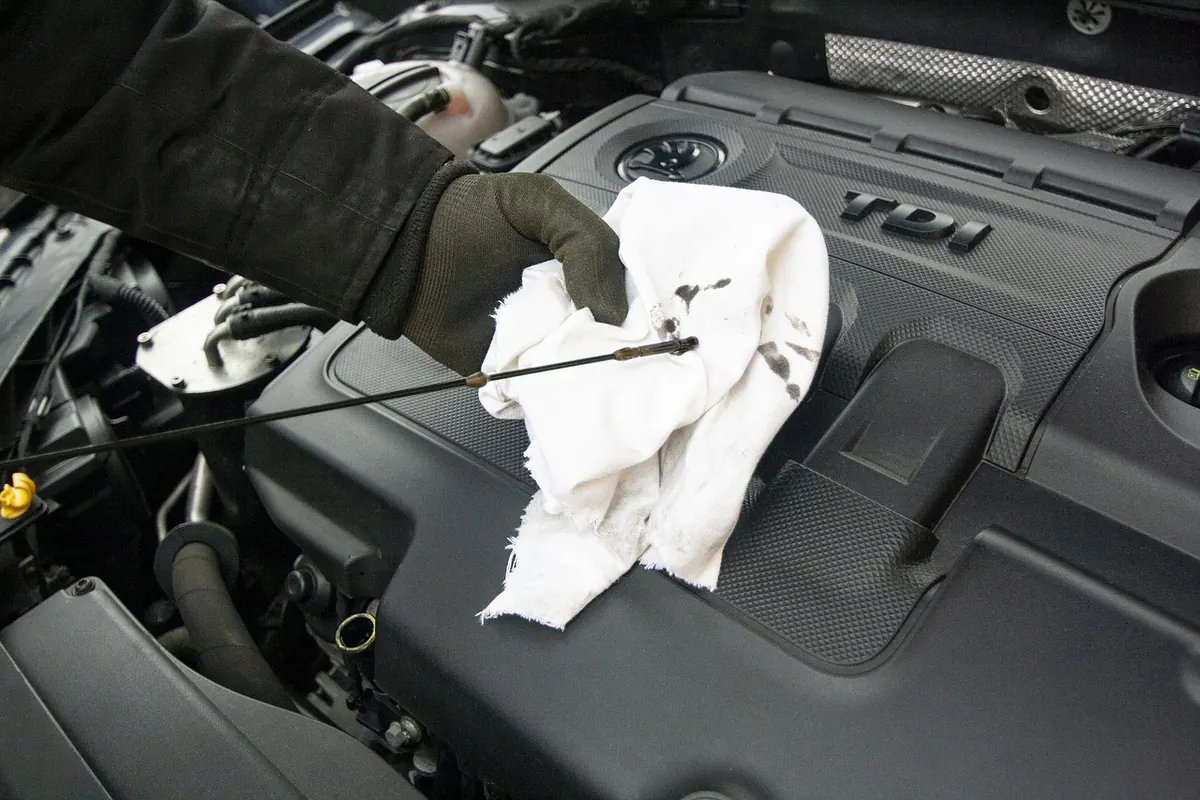
Change the engine oil before storage if it's due — used oil carries acids and water. Test the coolant's antifreeze strength, top up the brake fluid only if the level is genuinely low, and check the screen wash for a winter mix. Fill the fuel tank nearly full to leave little room for condensation, and add a fuel stabiliser if the car will stand for more than a couple of months. Then run the engine briefly to circulate it.
Take the battery out and keep it somewhere frost-free, on a smart trickle charger. Starting the car every fortnight "to keep it sweet" does more harm than good: it puts moisture into the exhaust and oil without ever getting hot enough to burn it off. Either leave it alone or take it for a proper drive on a dry day when the gritters haven't been out.
Airflow, dehumidifiers and tyres
A breathable indoor dust cover, or none at all, beats a plastic tarp. If you want a dehumidifier, use a desiccant type in a cold garage — refrigerant units lose efficiency below about 15°C — and keep a hygrometer nearby so you're working to a number. Somewhere around 50 to 60 per cent relative humidity is a sensible target; chasing 30 per cent in a garage with gaps under the door is a waste of electricity.
Tyres: pump them up a few psi above normal to reduce flat spotting, and if the car is laid up for months, roll it a few inches now and then so a different part of the tyre takes the load. Check with your insurer about laid-up cover and any notification they require if the car isn't being driven.
The monthly walk-round that saves a car
Set a reminder for the first weekend of each month. Open the garage, feel the carpets and boot floor for damp, glance at the moisture absorbers, spin the dehumidifier's tank, and shine a torch along the sills and arches. Ten minutes, once a month, is the difference between a car that fires up in April and one that needs welding. If a dry, salt-free day arrives in January or February, take it out for half an hour, get everything hot, and put it away dry. Your classic will thank you for it, and so will whoever owns it next.
Photo: Pexels / Pixabay